

Best Gluten Free Flour for Biscuits: A 2026 Guide
Table of Contents
- Why Gluten Free Flour for Biscuits Behaves Differently
- What to Look for in the Best Gluten Free Flour for Biscuits
- The Role of Xanthan Gum in Gluten Free Baking
- How to Make Gluten Free Biscuits Rise
- Gluten Free Biscuit Troubleshooting: Fixing Gummy, Gritty, and Flat Results
- DIY Custom Flour Blending and Vegan Substitutions
- Frequently Asked Questions
Last Updated: September 17, 2026
Why Gluten Free Flour for Biscuits Behaves Differently
Gluten free flour for biscuits behaves differently because it lacks the gluten network that gives wheat biscuits their lift and structure. Gluten is a protein that stretches, traps steam, and holds a biscuit together as it bakes. Take it out, and you have to rebuild that job with starches, binders, and the right liquid balance.
That is why a recipe that works with wheat flour can fail completely with a gluten free blend. The dough behaves like a different material. It is wetter, stickier, and far less forgiving.
Starch-to-Protein Ratio and the Missing Gluten Network
The starch-to-protein ratio is the single biggest factor in how a gluten free flour blend performs in biscuits. Wheat flour carries a balance of protein and starch that creates structure and tenderness at once. Gluten free blends lean heavily on rice flour, tapioca starch, potato starch, and similar ingredients, and that mix changes how the dough hydrates and sets.
A blend with too much starch produces a gummy, pasty crumb. Too much protein from alternative flours like sorghum or millet can make biscuits dense and dry. The FDA guidance on gluten-free food labeling sets the standard for what "gluten free" means on a package, so you know the flour you buy meets a defined threshold.
What to Look for in the Best Gluten Free Flour for Biscuits
The best gluten free flour for biscuits is a blend, not a single flour. Look for a mix that lists a balance of whole-grain flours and starches, plus a binder like xanthan gum. Single flours such as almond or coconut flour cannot mimic wheat on their own. They need partners.
Here is what to check on the label:
- A blend of two or more flours (rice, sorghum, millet) for structure
- Starches (tapioca, potato, corn) for tenderness
- A binder (xanthan gum or psyllium) already included, or added separately
- A stated 1-to-1 substitution claim if you want to swap it into a wheat recipe
All-Purpose Blend vs. Pastry Flour
An all-purpose gluten free blend is built for general baking and holds up in biscuits, muffins, and cakes. A pastry-style blend is milled finer and leans toward more starch, which gives a softer, more tender crumb structure. For biscuits, either can work, but pastry blends tend to produce a lighter result while all-purpose blends give more structure.
| Blend Type | Best For | Texture Result | Binder Needed |
|---|---|---|---|
| All-purpose gluten free | Biscuits, muffins, cakes | Balanced, holds shape | Usually included |
| Pastry-style gluten free | Tender biscuits, pie crust | Softer, finer crumb | Often added |
| Whole-grain gluten free | Heartier biscuits, bread | Denser, nuttier | Always added |
The Role of Xanthan Gum in Gluten Free Baking
Xanthan gum in gluten free baking acts as the stand-in for gluten. It is a binder that adds stretch and holds the dough together so biscuits do not crumble apart. Without it, most gluten free doughs fall flat and dry out fast.
Most blends include some xanthan gum already, so check before you add more. Overdoing it makes doughs slimy and produces a gummy texture. A common mistake is doubling the binder because the dough feels loose. In practice, a little goes a long way, and the right amount depends on the flours in your blend.
How to Make Gluten Free Biscuits Rise
To make gluten free biscuits rise, you need strong leavening agents, cold ingredients, and a hot oven. Baking powder does the heavy lifting, and cold butter creates steam pockets as it melts. That steam is what pushes the dough up when there is no gluten to stretch.
Follow these steps for a better rise:
- Whisk your baking powder through the dry blend so it is evenly spread
- Cut cold butter into the flour until it looks like coarse crumbs
- Add cold buttermilk and stir just until the dough comes together
- Pat, do not knead, and cut straight down with a sharp cutter
- Bake in a fully preheated oven so the oven spring kicks in fast
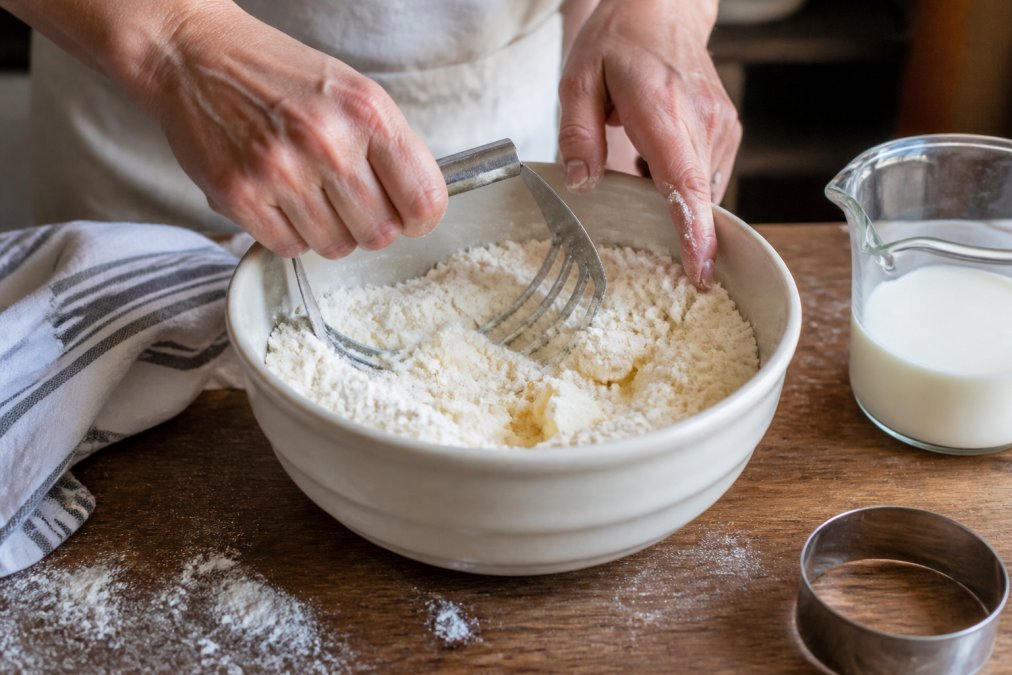
Letting the cut biscuits rest before baking helps the flours hydrate and the leaveners activate. That short resting time often means the difference between a flat biscuit and a tall one.
Gluten Free Biscuit Troubleshooting: Fixing Gummy, Gritty, and Flat Results
Gluten free biscuit troubleshooting comes down to three usual suspects: too much liquid, too much binder, or not enough heat. Gummy biscuits almost always mean the dough was too wet or the binder was overdone. Gritty biscuits point to a coarse flour or a blend that was not sifted.
Flat biscuits usually signal old baking powder or an oven that never got hot enough. Here is how to fix each one:
- Gummy texture: cut liquid slightly and reduce added binder
- Gritty mouthfeel: sift the blend and choose a finer-milled flour
- No rise: check your baking powder date and preheat fully
- Crumbly dough: add liquid a spoonful at a time, not all at once
DIY Custom Flour Blending and Vegan Substitutions
Blending your own flour gives you control over the starch-to-protein ratio, which matters when store blends run too starchy or too dense. The trade-off is that you take on the job the manufacturer was doing: balancing structure, tenderness, hydration, and binder in one scoop.
A Master Biscuit Blend You Can Adjust
Think in parts by weight, not cups, so the ratios scale cleanly. A workable starting framework for biscuits is roughly:
- Structure flours (about 60 percent of the blend): brown rice flour for the base, plus a smaller share of sorghum or millet for flavor and protein. These are what keep the biscuit from collapsing.
- Tenderness starches (about 40 percent of the blend): tapioca starch for chew and browning, potato starch for a light crumb, and a small amount of cornstarch if you want a cleaner, shorter bite.
- Binder: xanthan gum or psyllium husk, added at the rate the recipe calls for rather than assumed.
From that framework, adjust in one direction at a time. If biscuits come out gummy, shift a few points from starch toward structure flour. If they come out dense or dry, shift a few points the other way.
Vegan and Dairy-Free Substitutions That Actually Work
Most biscuit recipes assume buttermilk and butter, and both are doing structural work, not just flavor work. Buttermilk supplies acid that reacts with baking powder for lift, and butter supplies cold fat that melts into steam pockets. When you remove them, you have to replace the function, not just the ingredient.
- Buttermilk swap: use a plant milk with a splash of acid, lemon juice or vinegar, and let it sit a few minutes so it thickens and sours. The acid still drives the leavening reaction.
- Butter swap: use a plant-based butter or a solid coconut oil kept cold, and cut it in the same way. The key is that the fat stays solid until it hits the oven, so it can create steam. Soft or melted fat will not.
- Binder adjustment: vegan doughs often feel looser because plant milks and plant butters behave differently from dairy. Add binder in small increments and stop as soon as the dough holds together.
- Egg, if your recipe uses one: a flax or chia gel can stand in for binding, but it adds moisture, so reduce the liquid slightly to compensate.
High-Altitude Adjustments
If you bake at higher elevations, expect to adjust. Doughs tend to dry out faster and leaveners act more quickly, so add a little extra liquid and watch your rise closely. A common pattern is to reduce leavening slightly and increase liquid slightly, then bake at a marginally higher temperature for a shorter time so the structure sets before the biscuit over-expands and falls.
Frequently Asked Questions
What's the secret to fluffy gluten free biscuits?
The secret is a balanced flour blend with enough starch for tenderness and a binder like xanthan gum to replace gluten's structure. Use cold butter and buttermilk, handle the dough gently, and avoid overmixing. A hot oven (425°F) creates steam that lifts the dough for oven spring, giving you flaky layers instead of a dense brick.
Which gluten free flour is closest to all-purpose flour?
A 1-to-1 gluten-free all-purpose blend with a rice flour base, potato starch, and tapioca starch comes closest. These blends mimic the protein and starch balance of wheat flour. For biscuits specifically, look for a blend that includes xanthan gum or psyllium husk so the dough holds structure without gluten.
Does xanthan gum make a difference in gluten-free biscuits?
Yes. Xanthan gum replaces the binding and elasticity that gluten normally provides. Without it, biscuits crumble and fall apart. Most 1-to-1 blends already include it, but if yours does not, add about 1/2 teaspoon per cup of flour. Too much xanthan gum creates a gummy, slimy texture, so measure carefully.
Can I make biscuits with gluten-free flour?
Absolutely. Gluten-free biscuits work well when you use a quality blend, keep ingredients cold, and do not overwork the dough. The key differences are shorter resting time and gentler handling. Many bakers find that a mix specifically formulated for biscuits removes the guesswork and delivers consistent results every time.
Baking gluten free biscuits that taste like the real thing is a challenge, but it is one you can win with the right flour and a little patience. Biscuits By Daddy-O makes it easier with Southern-style gluten-free mixes crafted to deliver authentic taste and texture, plus vegan and dairy-free options for households with different needs. Get started with Biscuits By Daddy-O and bring back the comfort of a warm, flaky biscuit.